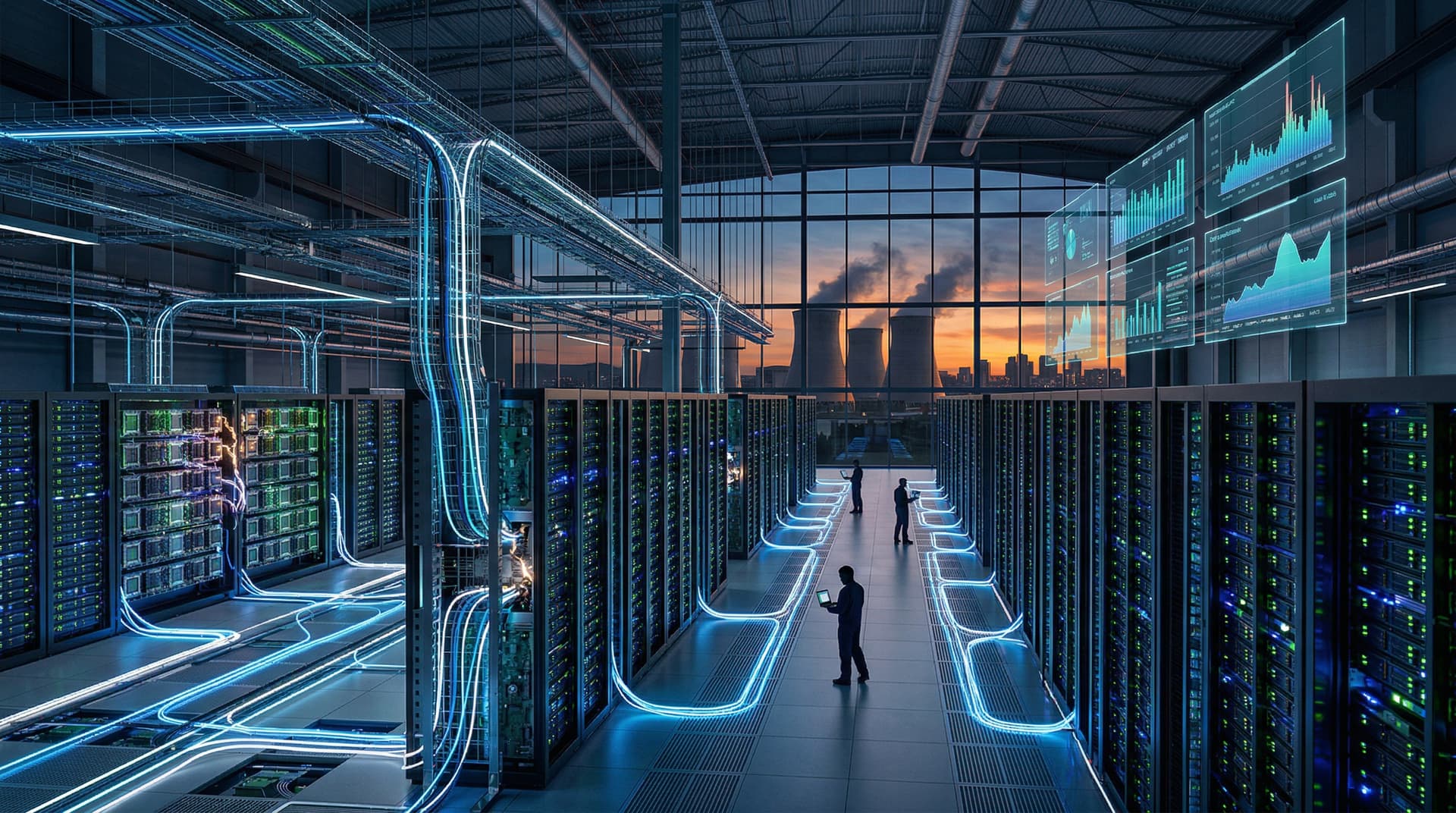
Amazon AI investments validated as AWS demand exceeds supply, CEO Andy Jassy revealed on April 10, 2026. Q1 AWS revenue reached $28.5B USD, up 17% YoY, with AI driving over 40% growth (Amazon earnings release).
AWS Demand Tops Capacity
Customers exhaust Nvidia H100 GPUs faster than AWS deploys them. Waitlists for large AI training clusters stretch months. Amazon's Trainium2 chips ship at full capacity, production ramping 5x faster than Trainium1 (Amazon earnings call).
Enterprise pilots convert to production workloads. Anthropic scales Claude models on AWS clusters. Stability AI trains Stable Diffusion 3.0 exclusively on AWS. Compute demand surged 300% YoY. AWS capex hit $12B USD last quarter, pushing data center utilization to 95% (Amazon earnings release).
Executives must match this infrastructure pace. Laggards risk losing AI leadership to Amazon's scale.
Q1 Financials Signal Momentum
Amazon posted $148.2B USD total Q1 revenue, beating consensus by $2.3B USD (Bloomberg). AWS margins expanded to 37%, generating $15.3B USD operating income, up 45% YoY.
Jassy projects $50B USD annualized AWS AI revenue by end-2026. Capex accelerates to $75B USD for 2026, 80% allocated to AI data centers and custom silicon. Shares rose 4.2% after hours on the news.
Inference workloads and fine-tuning now generate real revenue streams, debunking pure-hype narratives around generative AI.
Competitive Pressures Intensify
AWS commands 31% global cloud market share (Synergy Research Group, Q1 2026). Microsoft Azure reports similar GPU shortages, delaying OpenAI expansions. Google Cloud trails with 11% share, hampered by TPU supply constraints.
Amazon's $100B USD two-year AI spend (60% capex, 40% R&D) yields moats. Jassy dismissed skeptics: "Trillion-dollar markets await in AI agents and multimodal models" (earnings call). Bedrock serves over 100,000 customers, up 200% YoY.
Rivals scramble: Microsoft pledges $80B USD capex; Google targets $50B USD. Yet AWS's custom chips (Trainium, Inferentia) cut costs 40-50% vs. Nvidia, per internal benchmarks.
Investor Implications for Amazon AI Investments
Amazon AI investments deliver venture-like returns at scale. AWS AI run-rate could hit $100B USD by 2028, implying 25%+ CAGR. Valuation at 35x forward EBITDA factors in AI upside, but supply constraints signal re-rating potential to 45x.
Compare to public comps: Nvidia trades at 60x on AI chip dominance; Snowflake at 20x amid slower growth. AMZN offers balanced exposure, e-commerce stability plus AI acceleration.
Buyers eye Q2 capex guidance. Analysts project $200B USD AWS run-rate by 2028 (Jassy projection), lifting EPS 15% annually.
Actionable Steps for Operators
Enterprises pivot budgets to AWS for priority access. Utilization dashboards show real-time demand; lock in contracts now.
Optimize AI Stacks
- Audit workloads; deploy Inferentia for inference to slash costs 50% (Amazon benchmarks).
- Secure multi-year GPU reservations via AWS Capacity Blocks.
- Train teams on Bedrock, Amazon programs certify 500,000 developers annually.
McKinsey forecasts 2M ML engineer shortage by 2028. Allocate 60% capex to AI infra. Pilot agents on Bedrock; scale winners to production.
Amazon AI investments reshape cloud economics. Founders build on AWS to outpace incumbents. Investors underweight AMZN at peril, supply crunch cements leadership.