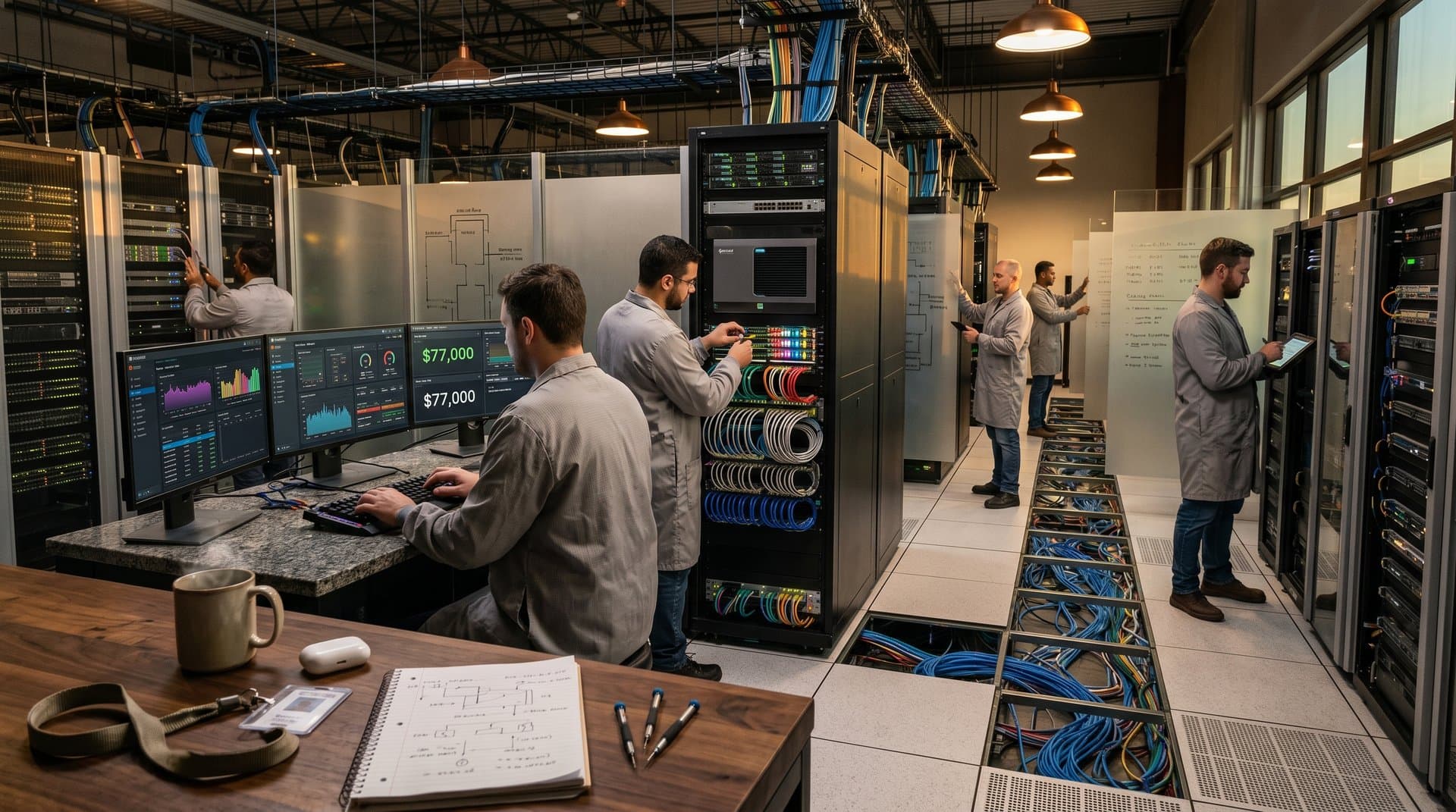
- 1. DIY PBX saves blockchain startups 80% on telephony vs. Twilio.
- 2. Fear Index at 33 and BTC $77,758 spur bootstrapping cost cuts.
- 3. Self-host Asterisk for Web3 sovereignty and privacy.
DIY PBX systems using Asterisk slash SaaS telephony costs 80% for bootstrapped blockchain startups. They ditch Twilio for self-hosted control. Bitcoin trades at $77,758, up 0.3% (CoinGecko). Crypto Fear & Greed Index sits at 33 (Alternative.me).
Remote Web3 teams drive high call volumes. Global ops amplify per-minute fees.
Crypto Pressures Drive DIY PBX Adoption
Post-ETF caution slows funding. Bitcoin tests $77K support after $108K peak (CoinGecko). Startups extend runways.
DIY PBX runs on Linux with FreePBX GUI. SIP trunks from Bandwidth or Telnyx cost $0.005/minute plus hardware—below Twilio's $0.013 outbound (Twilio pricing page).
A 50-developer startup with 50,000 minutes/month pays Twilio $650. DIY drops to $125 plus $50 fixed. Savings hit 80%.
- Asset: BTC · Price (USD): 77,758 · 24h Change: +0.3% · Market Cap: $1.54T
- Asset: ETH · Price (USD): 2,318 · 24h Change: +0.1% · Market Cap: $279B
- Asset: XRP · Price (USD): 1.42 · 24h Change: -0.7% · Market Cap: $83B
- Asset: BNB · Price (USD): 630 · 24h Change: -1.1% · Market Cap: $91B
Source: CoinGecko
Self-hosting aligns with Web3 decentralization post-FTX. Comms stay private, free of SaaS surveillance.
Twilio vs. DIY PBX Cost Breakdown
Twilio bills $0.013 outbound minute, $0.0085 inbound, $0.0075 SMS (Twilio pricing page). RingCentral adds $20/user/month.
DIY needs $500 Raspberry Pi or $2,000 server upfront, $10-50/month SIP trunks. Ongoing: $0.004-0.006/minute.
ROI: 100 daily calls (20 min each) = 60,000 minutes/month. Twilio: $780. DIY: $300. Annual savings: $5,760. Payback: 1-3 months.
Blockchain operators report 75-85% cuts for DAO calls and token sales, per Asterisk community forums (Asterisk wiki).
Deploy DIY PBX for Web3 Teams
Use Ubuntu 22.04 LTS. Install Asterisk: `apt install asterisk`. Add FreePBX GUI from freepbx.org.
Provision SIP trunk at Telnyx ($1 free credit). Enable unlimited channels.
Config Steps: 1. Edit `/etc/asterisk/sip.conf` for TLS. 2. Install Fail2ban: `apt install fail2ban`. 3. Build IVR: "Press 1 for pitch." 4. Add WebRTC via PJSIP.
Test with Zoiper. Scale to Kubernetes HA (Asterisk wiki). Devs deploy in 2-4 hours.
Web3 Integrations and Security
Integrate ENS for wallet caller ID. Route via Ethereum L2s like Base. Sync HubSpot CRM, Slack bots, on-chain call records.
Secure with TLS 1.3, SRTP, VPN trunks. Avoid SaaS outages in launches.
Risks and Mitigations
DIY demands sysadmin skills. Use DigitalOcean VPS ($20/month) or Sangoma appliances.
Maintenance: 2-4 hours/month. Reddit r/asterisk offers support.
Future: Whisper AI transcription, L2 scaling, USDC billing.
Startup Action Steps
1. Audit Twilio bills. 2. Test PBX on AWS Lightsail ($3.50/month). 3. Migrate lines gradually.
BTC eyes $80K. Bootstrappers secure DIY PBX comms now amid Fear Index 33 (Alternative.me).
Frequently Asked Questions
What is DIY PBX?
Self-hosted PBX using Asterisk on Linux with FreePBX GUI. Handles calls, video, messaging without SaaS.
Why choose DIY PBX now?
Cuts SaaS fees amid Fear Index 33 and BTC at $77K. Boosts privacy, customization for Web3 teams.
How to build DIY PBX?
Install Asterisk on Ubuntu, add FreePBX, provision SIP trunks. Secure with TLS, integrate ENS.
DIY PBX impact on blockchain?
Full comms control scales for DAOs, avoids outages. 80% savings vs Twilio at high volumes.