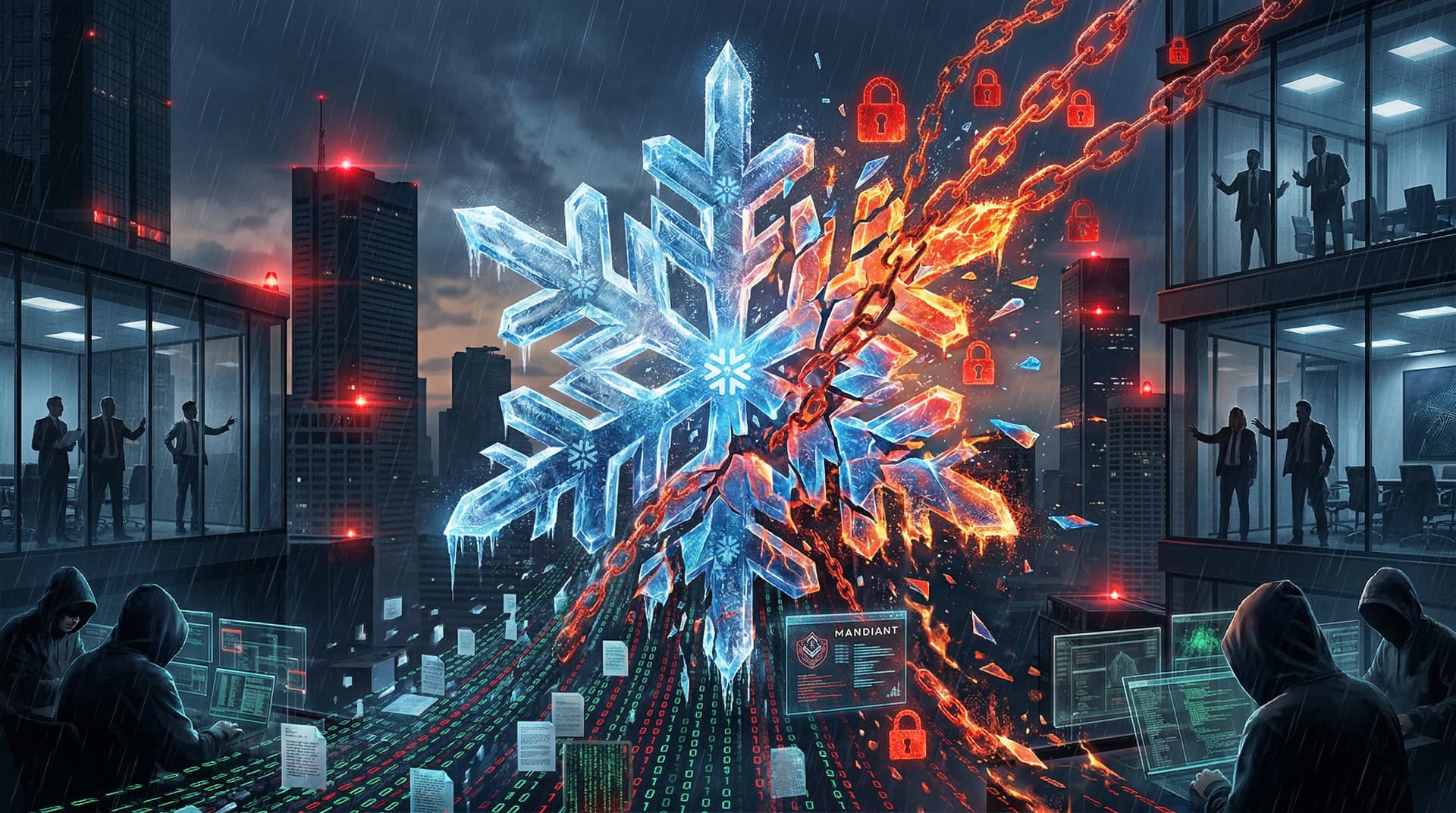
In a stark reminder of the fragility of cloud supply chains, Google's Mandiant security team released a detailed report on August 6, 2024, unveiling a widespread hacking campaign against Snowflake customers. Dubbed UNC5537 by Mandiant, the threat actor exploited poorly secured Snowflake instances—primarily those lacking multi-factor authentication (MFA)—to siphon massive datasets from high-profile organizations including Ticketmaster, Santander Bank, and Advance Auto Parts. This incident, unfolding over months but dissected publicly this week, highlights escalating risks for business leaders navigating the startup ecosystem and enterprise SaaS dependencies.
The Mechanics of the Attack
Mandiant's investigation traces the breaches back to May 2024, when initial Snowflake customer compromises surfaced. Attackers didn't deploy zero-days or sophisticated exploits; instead, they relied on opportunistic credential stuffing. Using username-password pairs harvested from infostealer malware and old data dumps (like the 2021 LinkedIn scrape), hackers tested these combos directly on Snowflake's login portals.
Key enabler? Absent MFA. Of the 165 impacted Snowflake accounts Mandiant analyzed, nearly all lacked it, allowing seamless unauthorized access. Once in, perpetrators downloaded raw data—up to 1.5 terabytes from a single victim—before exfiltrating it for sale on dark web forums. Groups like Scattered Spider (aka 0ktapus), known for social engineering, are implicated in brokering the stolen goods.
Snowflake itself wasn't breached; the cloud data warehouse provider confirmed no core systems were compromised. However, its customer-configured instances became the weak link, exposing a classic shared responsibility model failure.
Corporate Casualties and Financial Fallout
The breach roster reads like a Fortune 500 who's who:
- Ticketmaster: Over 1.5 TB of customer data, including names, addresses, and payment details, auctioned online.
- Santander Bank: Loan application records pilfered, prompting regulatory notifications.
- Advance Auto Parts: Sensitive employee and vendor info compromised.
Other victims span healthcare, retail, and tech sectors, with data volumes in the tens of gigabytes to terabytes. For executives, the repercussions are immediate: class-action lawsuits, SEC disclosures, and eroded customer trust. Ticketmaster parent Live Nation, already reeling from prior incidents, faces intensified scrutiny amid peak summer ticketing.
Quantifying losses is tricky—ransomware demands haven't materialized en masse—but remediation costs soar. Mandiant estimates victims spent millions on incident response, with long-tail expenses for credit monitoring and compliance audits. In the startup world, where margins are razor-thin, such hits can derail funding rounds or force pivots.
Executive Wake-Up Call in the Startup Ecosystem
For C-suite leaders, this is more than a tech hiccup; it's a boardroom imperative. SaaS platforms like Snowflake power 70% of modern data pipelines, per Gartner stats, yet configuration drift remains rampant. Startups, often prioritizing speed over security, mirror enterprise lapses—skipping MFA to streamline dev workflows or cut costs.
Consider the ecosystem ripple: A breached SaaS vendor cascades risks downstream. Portfolio companies at VC firms like a16z or Sequoia, reliant on Snowflake for analytics, now audit configs urgently. Founders pitching Series A decks must address cybersecurity roadmaps, as investors grill on supply chain diligence post-SolarWinds and Log4j.
"This campaign exploited the lowest-hanging fruit," Mandiant's report warns. "Basic hygiene—MFA, IP allowlisting, service accounts without web UIs—could have prevented it." Execs ignoring this do so at peril, especially with rising nation-state and cybercrime focus on cloud crown jewels.
Strategic Defenses for Leaders
Drawing from Mandiant's playbook, here are actionable steps for executives and startup CTOs:
1. Enforce Universal MFA: No exceptions. Snowflake now mandates it for new trials, but legacy accounts linger. 2. Rotate Credentials Proactively: Pair with monitoring for anomalous logins via SIEM tools like Splunk or Google Chronicle. 3. Segment Data Access: Use Snowflake's row-level security and private connectivity (Snowsight Private Links). 4. Vendor Risk Management: Third-party audits via frameworks like NIST 800-53 or SOC 2 Type II. 5. Incident Preparedness: Run tabletop exercises simulating SaaS breaches, integrating with cyber insurance policies.
Startups can leverage open-source tools like OSSEC for host monitoring or TruffleHog for secret scanning. Enterprises should invest in SSPM (SaaS Security Posture Management) platforms from vendors like Lasso or Adaptive Shield, which automate config checks across 100+ apps.
Broader Industry Shifts
This Snowflake saga accelerates momentum toward zero-trust architectures. Post-CrowdStrike outage (July 19), boards demand resilience; now, data exfiltration joins the narrative. Regulators circle: EU's DORA and US SEC cyber rules mandate 48-hour breach disclosures, pressuring transparency.
In the startup arena, cybersecurity VCs like Cyberstarts and Forgepoint are doubling down. Funding for MFA startups (e.g., Silverfort) spiked 30% YOY, per PitchBook. Execs ignoring this trend risk valuation haircuts—breaches shave 5-10% off market caps, per Cyentia Institute.
Looking Ahead
Mandiant's report isn't just a postmortem; it's a manifesto for proactive defense. As UNC5537 evolves—potentially chaining to downstream apps—business leaders must treat security as a revenue driver, not cost center. For startups scaling on SaaS, the message is clear: Secure the stack from day one, or become tomorrow's headline.
In an era where data is the new oil, leaks like Snowflake's are refinery explosions. Executives who act decisively will not only mitigate risks but outpace competitors in trust and agility.
Top Shelf News covers executive strategies at the intersection of business and tech. Stay tuned for more on emerging threats.