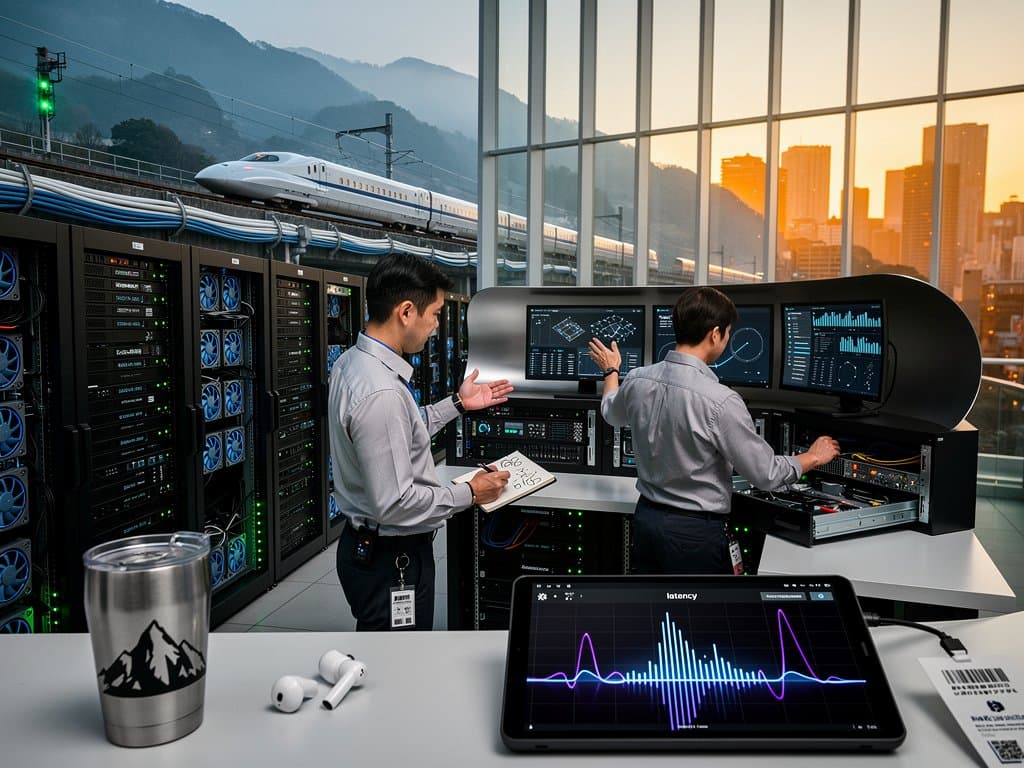
- 1. Dedicated tracks deliver 99.99% Shinkansen uptime, like cloud multi-region failover.
- 2. ATC and sensors enable real-time adjustments, mirroring Kubernetes orchestration.
- 3. Modular designs support horizontal scaling, cutting cloud overprovisioning costs.
Shinkansen scalability blueprints resilient cloud operations as Bitcoin drops 2% to $75,788 USD (Oct. 10, 2024), per CoinGecko data. Fear & Greed Index hits 26 (extreme fear), per Alternative.me. JR Central and JR East sustain 99.99% uptime over 60 years with zero fatalities, Bloomberg reports.
Shinkansen Uptime Record
Shinkansen launched in 1964 (Tokyo-Osaka). Network now spans 2,387 km, carries 330,000 passengers daily. Average delay: 24 seconds/train, JR Central states.
10 billion passengers since start. Zero fatal accidents despite quakes, typhoons. Safety culture demands rigorous training, zero lapses.
Cloud founders emulate this amid BTC volatility to secure VC trust.
Dedicated Tracks for Bulletproof Ops
Exclusive high-speed tracks isolate Shinkansen from freight, commuters. Automatic Train Control (ATC) adjusts speeds real-time via forward signals.
Earthquake sensors detect P-waves in 3-5 seconds, halt trains instantly. N700S series hits 300 km/h; modular cars scale capacity sans redesign.
Cloud equivalent: AWS multi-region setups mimic tracks. Kubernetes orchestrates clusters for failover. ATC parallels eliminate single failure points.
N700S aerodynamic noses cut drag 20%, per JR Central. Terraform's immutable infra yields similar efficiency.
Predictive Maintenance Enables Scaling
Daily diagnostic trains scan 27,000 km tracks. ML models predict repairs, prevent outages.
Datadog/Prometheus mirror this monitoring. Alerts fire pre-failure. Shinkansen expanded nationwide sans safety dips.
Routes grew incrementally: Tokyo-Hakata (1975), Kyushu extensions. No capital waste on overprovisioning.
Golden Week: JR adds 200 extra trains/day. Cloud auto-scaling groups (e.g., AWS) handle spikes; serverless like Lambda cuts idle costs 70%, AWS case studies claim.
Funding Resilience in Volatility
VCs demand ops proof amid fear. BTC 2% dip hits portfolios, hikes pitch bars.
Quantify Shinkansen metrics: 99.99% uptime, sub-minute failovers.
Snowflake IPO'd 2020, raised $3.4B at $33B+ valuation (SEC filings). Scalable warehousing justified premium multiples.
Databricks raised $500M Series J at $43B post (2023), Crunchbase reports. Kubernetes modularity drew Andreessen Horowitz.
Multi-region redundancy costs 20-30% more upfront, saves 50% downtime losses (Gartner 2024 cloud report).
AI/Edge Precision Like Rail Hubs
AI surges compute demand. Edge decentralizes loads, Shinkansen-style.
NVIDIA DGX needs ATC-like orchestration. GitOps immutable deploys ensure consistency.
JR East 2023 AI upgrades predict routing (company releases). Cloud: Kubeflow scales ML horizontally.
In BTC fear (26), Shinkansen scalability wins capital. Incremental builds beat big-bang risks. Investors reward precision.
Frequently Asked Questions
What is Shinkansen scalability?
Dedicated tracks and modular N700S designs handle demand surges. Cloud startups use auto-scaling clusters for similar resilience.
Why has Japan got such good railways?
ATC, earthquake sensors, and daily inspections ensure 99.99% uptime. JR model inspires cloud redundancy.
How does Shinkansen scalability benefit cloud startups?
Horizontal scaling and predictive maintenance avoid downtime in BTC volatility. Kubernetes mirrors rail modularity.
What cloud operations lessons come from Shinkansen?
Real-time controls and multi-region setups prevent failures. Achieve rail-like precision for 99.99% uptime.