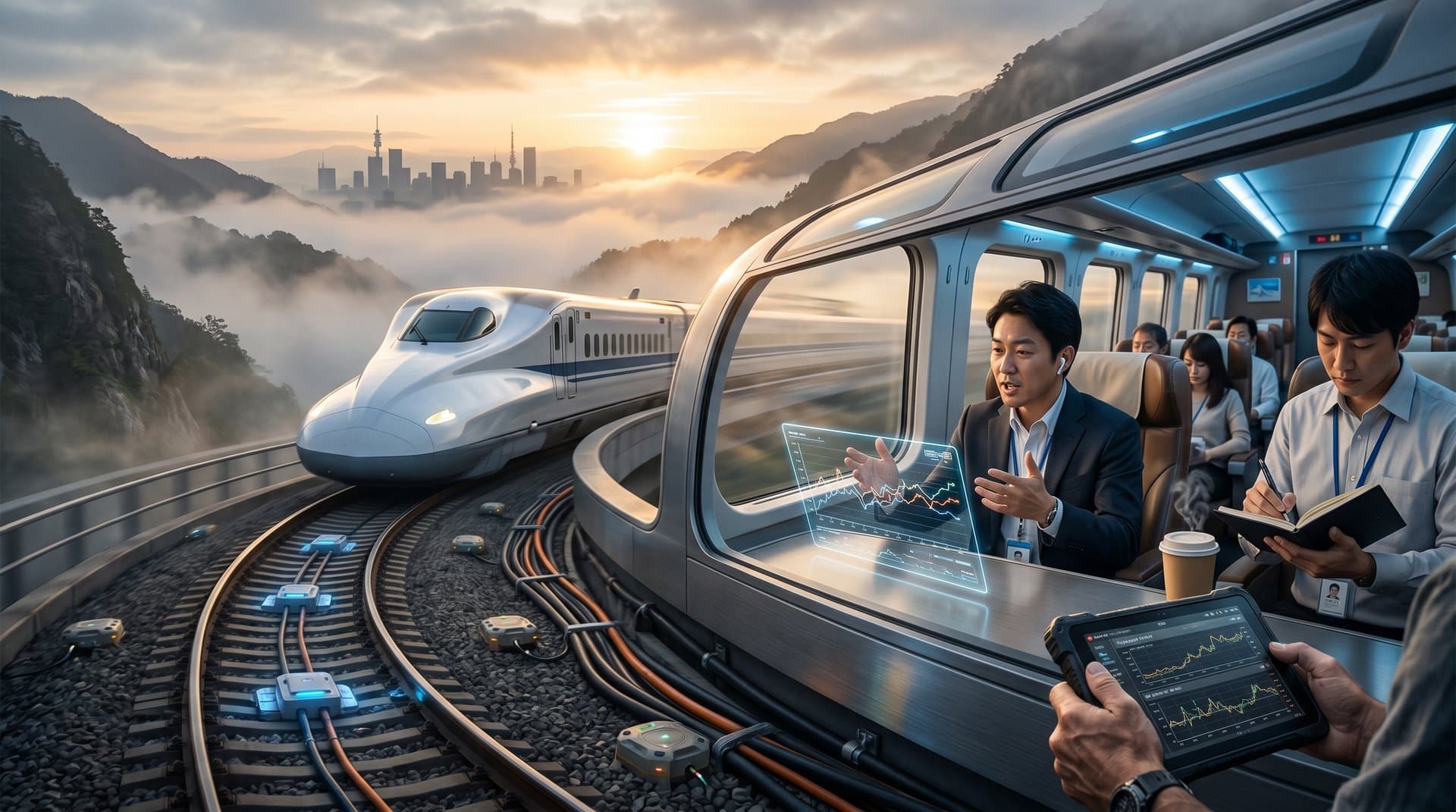
- 1. Privatization boosts efficiency: JR stations yield 40% non-ticket revenue, self-funding growth.
- 2. Redundancy ensures reliability: Sensors halt trains in 3 seconds, zero fatalities in 60 years.
- 3. Self-funding scales: L2 fees generate $1B+ annually, mirroring JR Central's cash flows.
Central Japan Railway (JR Central) achieves 99.9% uptime on Tokyo-Osaka Shinkansen via privatization-driven scaling secrets for blockchain startups (JR Central 2023 report). BTC fell 1.9% to $75,706 USD on October 15, 2025 (CoinMarketCap). Fear & Greed Index hit 26 (Alternative.me).
JR Central mirrors layer 1 demands with vertical integration and redundancy. Solana spreads load across dedicated validators like Shinkansen's isolated tracks. Ethereum cut energy 99.95% post-Merge (Ethereum Foundation, 2022).
1987 Privatization Slashed Costs, Boosted Revenue
Japan split Japanese National Railways into seven JR firms in 1987, shedding $300 billion debt (World Bank, 1988). JR Central took profitable lines and listed on Tokyo Stock Exchange in 1993 (Nikkei Asia).
Stations now yield 40% revenue from retail and ads: ¥1.2 trillion JPY in 2023 (JR Central report). Costs dropped 25% in five years without subsidies (Japanese Ministry of Land, Infrastructure, Transport and Tourism, 1992).
JR Central operations overview.
Uniswap v3 generated $2.5 billion annualized fees in 2024 (DefiLlama). DAO treasuries hold $15 billion (DeepDAO Q3 2025). Solana Foundation invested $314 million in validators (Solana Labs).
Redundancy Delivers Zero-Fatality Reliability
Earthquake sensors stop Shinkansen trains in 3 seconds over 2,500 km (Bloomberg, March 2024). Triple-redundant signaling yields zero passenger deaths in 60 years (JR Central).
Shinkansen engineering deep dive.
Solana hit 65,000 TPS with Firedancer (Solana Labs, September 2025). Optimism scales to 2,000 TPS at $0.01 fees, earning $500 million annually (L2Beat, October 2025). Arbitrum TVL reached $20 billion, up 150% YoY (DefiLlama).
- Asset: BTC · Price USD: 75,706 · 24h Change: -1.9% · Market Cap USD: 1.49 trillion
- Asset: ETH · Price USD: 2,354 · 24h Change: -2.8% · Market Cap USD: 283 billion
- Asset: SOL · Price USD: 156 · 24h Change: -4.1% · Market Cap USD: 72 billion
- Asset: XRP · Price USD: 1.43 · 24h Change: -3.4% · Market Cap USD: 81 billion
Source: CoinMarketCap, October 15, 2025.
Self-Funding Fuels Expansion Without Debt
JR Central reinvests ¥2.8 trillion operating revenue into N700S trains and 2027 maglev (JR Central investor relations). Debt halved to ¥5 trillion by 2023; free cash flow hit ¥400 billion.
Base chain fees reached $1.2 billion YTD 2025 (DefiLlama). Polygon derives 60% growth from staking (Polygon Labs).
Lessons for Investors: Prioritize Resilient Economics
JR Central returned 12% annualized since 1993 IPO (Tokyo Stock Exchange). Solana FDV hit $70 billion post-raises (Messari Q3 2025). Staked ETH yields 4.2% on $60 billion (Beaconcha.in).
Target protocols with $100 million+ revenue and 99.9% uptime, like Celestia at $500 million TVL (Celestia.org).
Founders integrate station-like revenue (30% from staking/MEV). Build Shinkansen redundancy for 99.99% recovery. Investors favor self-sustaining L1s/L2s amid BTC volatility and EU MiCA rules.
Frequently Asked Questions
What are Shinkansen scaling secrets?
1987 privatization split JNR into JR firms. JR Central integrates revenue streams for self-funded expansion, mirroring blockchain tokenomics.
How does Shinkansen apply to blockchain startups?
Redundant sensors and dedicated tracks ensure 99.9% uptime, like Solana validators. Fees fund growth amid BTC $75,706 dips.
Why prioritize reliability in crypto markets?
Fear & Greed at 26 tests protocols. Shinkansen ignores noise for compounding, guiding layer 1 builders.
What action for founders?
Diversify revenue, build fault tolerance, comply with MiCA. Echo JR's hybrid competition-standards model.