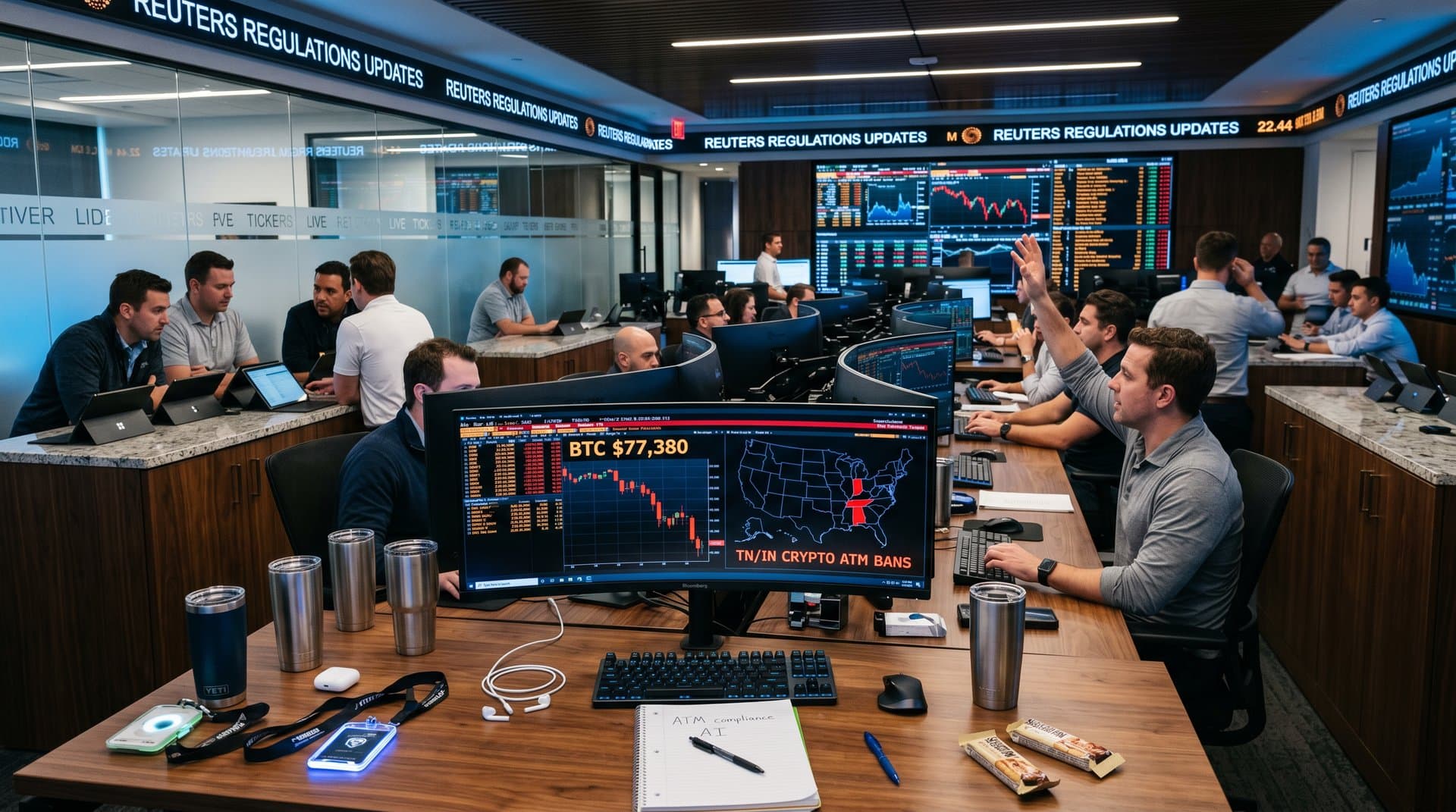
- Tennessee ban raises compliance costs 30-50% for hardware startups.
- AI geo-fencing auto-disables ATMs in 10+ restricted states.
- VCs prioritize software ramps over regulated kiosks.
Tennessee's crypto ATM ban took effect December 15, 2023. The Department of Commerce and Insurance ordered operators to cease statewide services, mirroring Indiana's shutdown. Regulators cite scams and 20% fees, driving 30-50% compliance cost surges for fintech startups. Bitcoin fell 0.4% to $77,380 USD (CoinMarketCap).
Operators like General Bytes and BitAccess halted Tennessee deployments. The Fear & Greed Index hit 31.
Regulatory Drivers Fueling Tennessee Crypto ATM Ban
Commissioner Carter Lawrence stated: "These machines enable scams and money laundering without oversight."
A CoinDesk report by Nikhilesh De notes Indiana revoked licenses from 15 operators after complaints surged. Victims lost $5 million USD to scams in 2023 (Federal Trade Commission). Crypto ATMs bypass full KYC, enabling quick cash-to-Bitcoin trades.
Reuters reports 10 U.S. states probe risks. Nationwide machines total 28,000 (Coin ATM Radar, December 2023).
State Fragmentation Explodes Fintech Hardware Costs 30-50%
Chainalysis VP Jonathan Levin estimates 30-50% cost hikes from legal reviews and state-specific tech. General Bytes CEO Tomas Kral told CoinDesk the ban erases $2 million USD annual revenue. Operators shift hardware to Texas and Wyoming.
Glassnode on-chain data from December 15 shows stable Bitcoin holders despite the dip (Glassnode BTC Price Metric).
Crypto ATM Revenue Hit and Industry Pivots
Global machines number 38,000, with U.S. at 75% (Coin ATM Radar). Operators earned $1.2 billion USD in fees last year at 15-25% rates. Tennessee's 450 units generated $15 million USD annually.
Bans cut 10-15% U.S. capacity. BitAccess CEO Peter Vessens warns of $500,000 USD yearly compliance per firm. Startups like Lamassu and Genesis Coin add low-fee fiat ramps via Coinbase Commerce APIs.
AI RegTech Enables Compliance in Tennessee Crypto ATM Ban Era
Fintechs use ML for AML screening and GPS geo-fencing. Chainalysis reactor flags risky wallets in firmware.
RegTech.ai parses 50-state laws, spotting bans 48 hours early. CEO Maria Gonzalez told TechCrunch: "AI cuts compliance time 70%."
Hardware auto-disables in restricted zones, saving 90% fleets. Elliptic analytics hit 98% KYC accuracy. Florida AG Ashley Moody probes 200 ATMs (Reuters).
VC De-Risks Shift to Software Ramps
a16z crypto partner Arianna Simpson tweeted December 14: "Hardware kiosks yield 2x lower IRR than software ramps amid regs."
Pitches now spend 25% of diligence on state risks (Newcomer VC survey). CEOs lobby Blockchain Association for federal rules, trailing EU MiCA since June 2023.
Investor Actions Post-Tennessee Crypto ATM Ban
Operators: Add AI geo-fencing; target Texas (2,500 ATMs). VCs: Favor software; require reg moats in term sheets.
Fragmented regs favor AI-bundled on-ramps. Bitcoin holds $75,000 USD support (Glassnode). Bans force $200 million USD hardware shifts by Q2 2024.
Frequently Asked Questions
Why did Tennessee ban crypto ATMs?
Commissioner Carter Lawrence targeted scams, 20% fees, and laundering. Mirrors Indiana's revocations after $5M victim losses, per FTC.
How does the ban affect Bitcoin price?
BTC dropped 0.4% to $77,380 USD; Fear & Greed at 31. Glassnode shows on-chain stability.
What challenges hit fintech startups?
30-50% cost surges from 50-state compliance. Pivots to AI KYC, geo-fencing, Texas/Wyoming.
Will other states ban crypto ATMs?
Florida and New York probes underway per Reuters. Federal rules lag EU MiCA.