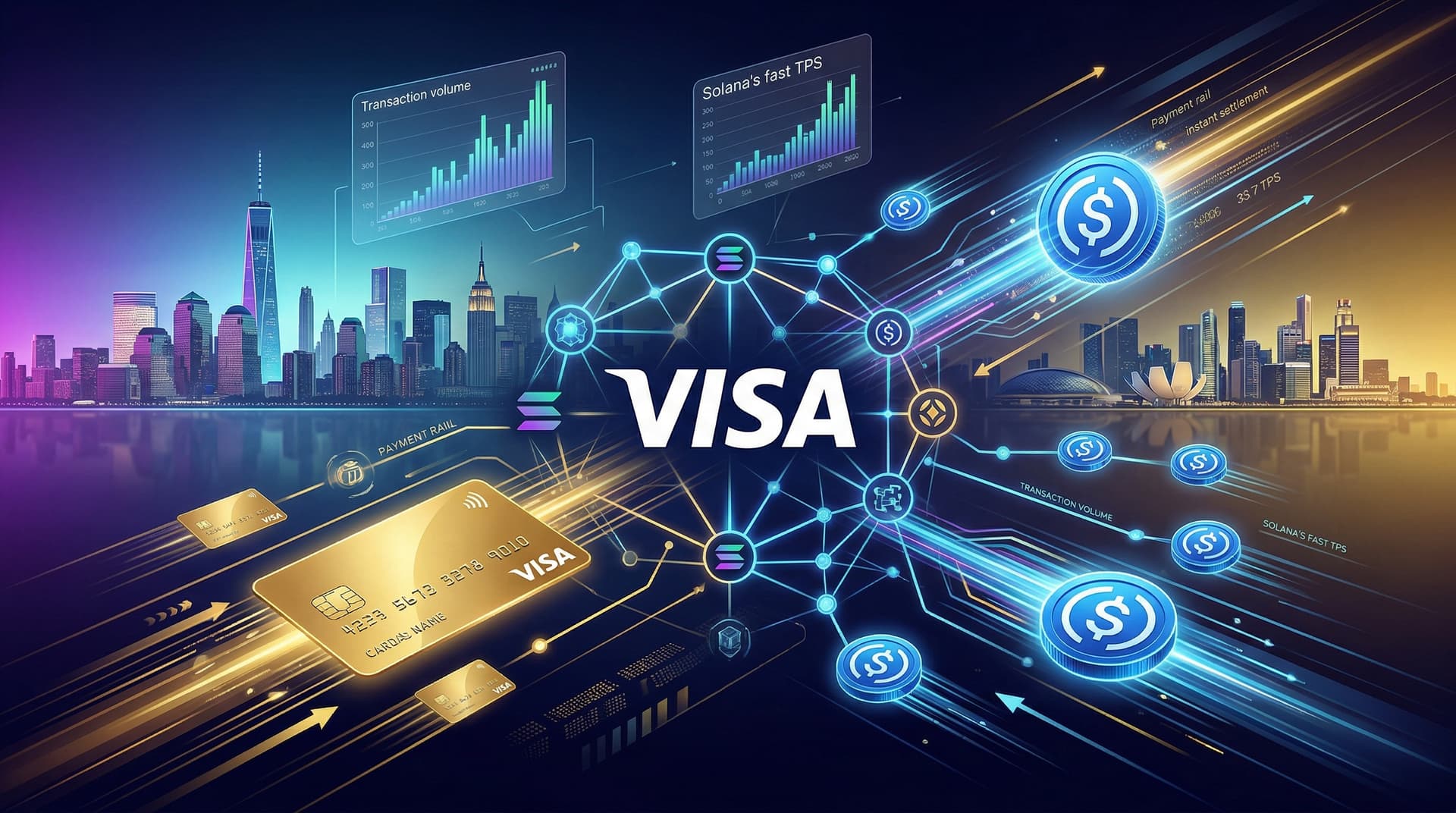
In a bold move signaling the maturation of blockchain in mainstream finance, Visa announced on February 8, 2023, that it will expand its stablecoin settlement capabilities to the Solana network using Circle's USDC. This development allows Visa's fintech partners to settle transactions nearly instantly, leveraging Solana's high throughput and low costs. For executives navigating the startup ecosystem, this underscores a pivotal shift where legacy payment giants are actively integrating crypto rails to outpace competitors.
Visa's Evolving Crypto Strategy
Visa has been at the forefront of crypto adoption since piloting stablecoin settlements on Ethereum in 2021. That initial program enabled over 3 million USDC transactions settled on Visa's network, processing more than $2 billion in volume by early 2023. The expansion to Solana builds on this foundation, addressing Ethereum's scalability limitations amid rising network congestion and fees.
Rahul Advani, Visa's Vice President of Crypto, highlighted the strategic rationale: "Solana's performance characteristics make it ideal for payment use cases requiring speed and reliability." This isn't mere experimentation; it's a calculated bet on programmable blockchains as the future of payments infrastructure. With Visa processing over 200 billion transactions annually across its rails, even incremental efficiencies from blockchain could yield billions in value.
For fintech startups, this opens doors. Partners like Bridge, a stablecoin infrastructure provider already using Visa for Ethereum settlements, can now tap Solana's 65,000 transactions per second (TPS) capacity—dwarfing Visa's own net settlement speed of T+1 or longer in traditional systems.
Technical Details of the Integration
The rollout involves Visa Direct, its real-time push payments platform, interfacing with Solana via custom APIs. Merchants and platforms convert fiat to USDC, settle on-chain, and reconvert to local currency—all within seconds. Key benefits include:
- Near-zero fees: Solana's average transaction cost hovers under $0.01, compared to Ethereum's variable gas fees often exceeding $5 during peaks.
- Global reach: USDC, with a circulating supply exceeding $40 billion as of February 2023, is natively supported across 10+ blockchains, backed 1:1 by USD reserves.
- Compliance-first: Visa mandates KYC/AML adherence, aligning with regulatory scrutiny post-FTX fallout.
This multi-chain approach positions Visa as a neutral layer atop fragmented blockchains, much like its role in card networks. Early adopters include crypto-friendly fintechs in Latin America and Asia, where remittances represent a $700 billion market ripe for disruption.
Implications for the Fintech Startup Ecosystem
Fintech executives should view this as both opportunity and competitive pressure. Startups building on Solana—such as payment processors Helio and Solana Pay—gain instant credibility through Visa's endorsement. Valuation uplifts are likely; Solana ecosystem projects raised over $500 million in 2022 alone, with momentum carrying into 2023.
However, incumbents like Stripe and Adyen face urgency to accelerate their blockchain pilots. Stripe's recent crypto on-ramps and Adyen's stablecoin explorations pale against Visa's scale. For venture-backed firms, this signals investor preference for interoperable, chain-agnostic solutions.
| Metric | Ethereum (Visa Pilot) | Solana (New) | |--------|-----------------------|--------------| | TPS | 15-30 | 65,000 | | Avg Fee | $1-10 | <$0.01 | | Settlement Time | Minutes-Hours | Seconds | | Volume Handled (2022) | $2B+ | Scaling |
This table illustrates the efficiency gap, critical for startups targeting high-velocity use cases like micropayments or DeFi yield aggregation.
Regulatory Tailwinds and Headwinds
Timing aligns with pro-crypto policy shifts. The EU's MiCA framework, advancing through committees in early 2023, promises stablecoin licensing clarity. In the US, despite SEC actions against exchanges, payments infrastructure like USDC evades security token classifications, buoyed by Circle's transparency reports.
Risks persist: Network outages plagued Solana in 2022, though upgrades like QUIC protocol have stabilized it to 99.9% uptime. Visa's risk controls, including circuit breakers, mitigate this. Executives must diligence chain reliability in go-to-market strategies.
Strategic Advice for Fintech Leaders
1. Integrate multi-chain: Build abstractions over protocols like USDC to future-proof against chain wars. 2. Partner aggressively: Visa's partner program offers API sandboxes; startups should apply to co-develop use cases. 3. Focus on UX: Blockchain's promise hinges on invisible rails—prioritize fiat on/off-ramps. 4. Monitor valuations: Solana's TVL surged 300% in 2022 to $1.5B; expect fintech tie-ins to drive similar growth.
Visa’s C-suite, led by CEO Ryan McInerney, views crypto as "incremental to our core business," but actions speak louder. This Solana push could capture 1-2% of Visa's $14 trillion annual volume via stablecoins within years.
Looking Ahead
As banks like JPMorgan experiment with Onyx and fintechs like Revolut embed crypto wallets, Visa's Solana bet cements its innovation edge. For startup founders pitching decks in 2023, highlight blockchain interoperability—it's no longer niche. This announcement isn't just tech news; it's a blueprint for scaling payments in a tokenized economy.
Word count: 912